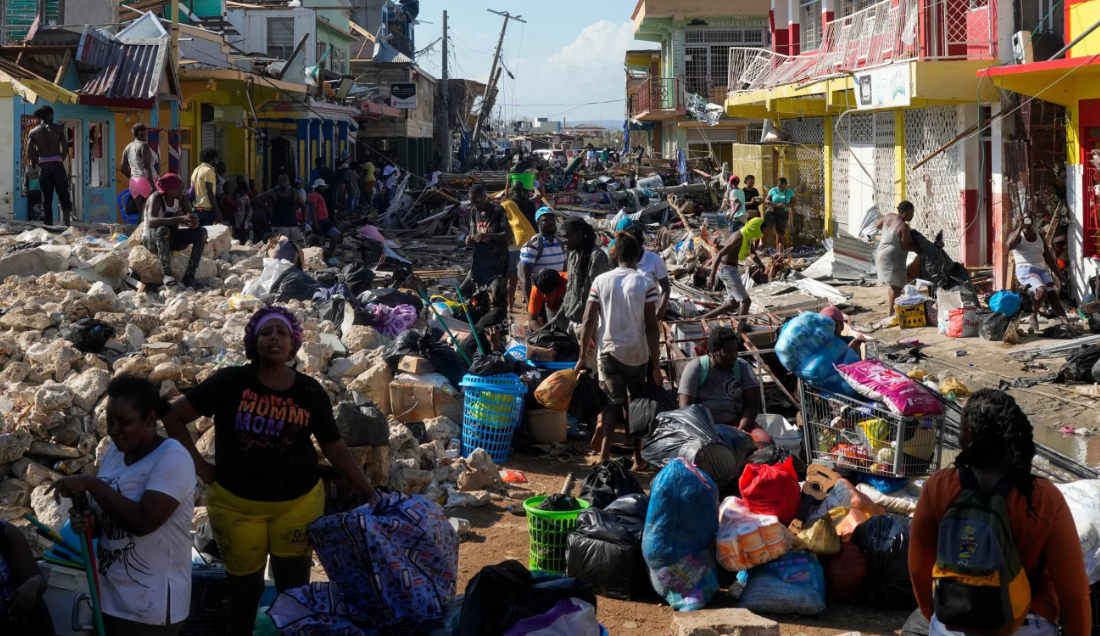
On Tuesday, October 28, Hurricane Melissa made landfall in Jamaica as a Category 5 hurricane. Category 5 is the strongest level of hurricane, with the highest potential for damage. Hurricane Melissa caused significant destruction, leaving most of the island without power. The following day, Melissa touched down in Cuba as a Category 3 hurricane. It continued its devastation and began making its way towards the Bahamas and Haiti. The storm has been deadly; at least 32 bodies have been recovered in Jamaica, 43 more people were found dead in Haiti, and two people died in the Dominican Republic, and those numbers continue to rise.
Hurricane Melissa has now made history as one of the strongest Atlantic hurricanes on record. Its maximum sustained winds were 185 mph, which makes this one of the strongest hurricanes ever recorded in the Caribbean.
Jamaica was hit hard by strong winds and flooding rain, and search and rescue crews continue to search for missing residents. There was also damage to major infrastructure throughout Jamaica. “There is urgent need for support,” reports Coleridge Minto, the St. Elizabeth Police Superintendent.
Almost three-quarters of the country lost power, and according to the Red Cross, 72% of people across Jamaica still do not have electricity, and around 6,000 are in emergency shelters as of November 2.
One of the biggest challenges was the difficulty for first responders to reach parts of the island due to debris, road blockages, and flooding. Jamaica’s airports were also temporarily closed, which delayed aid from reaching those in need.
For the town of Black River, Jamaica’s Prime Minister, Andrew Holness, has described it as the “ground zero” for damage. Black River is located in the southwest part of the island, and was among the first hit by the storm. According to BBC News, “No inch of this town was spared.” Many homes, historical buildings, and communication towers were destroyed in the 185 mph winds. Britney Samms, a Black River resident, told CNN, “We have nowhere to stay.” Many residents are being forced to stay in “makeshift shelters” until help arrives.
Residents of Black River and all across Jamaica are pleading for help. Black River resident Anyaleepy told CNN, “I need a shelter also, and I need food for my kids, I need clothes for my kids. And not only for me, but everybody who can come and help us. Jamaica really needs your help. We’re dying out here.”
Gradually, emergency crews have arrived to help wherever they can.
Many residents across the country are haunted by the storm. “The most terrifying experience of my life, and I would not want to see it again,” said a staff member at the Black River Hospital. Another hospital staff member described dodging glass and debris as windows blew out and the building shook. Prime Minister Holness praised Jamaica’s hospital workers for continuing to care for patients through the storm, according to ABC News.
As of Thursday, October 30, around 13,000 people remained in shelters across Jamaica. Jamaica and the rest of the Caribbean will begin to rebuild their lives as soon as possible. For now, Hurricane Melissa will go down in history as one of the strongest storms on record.