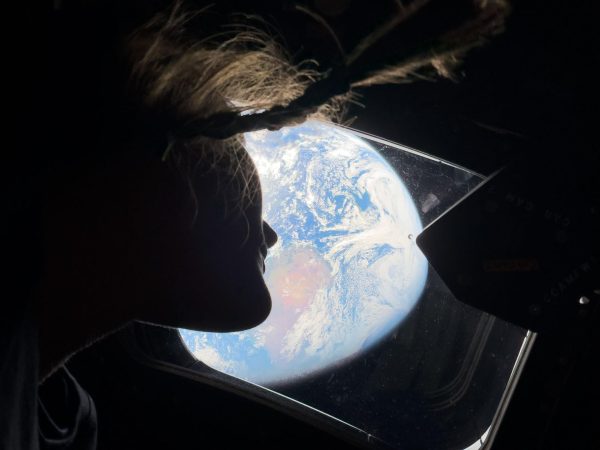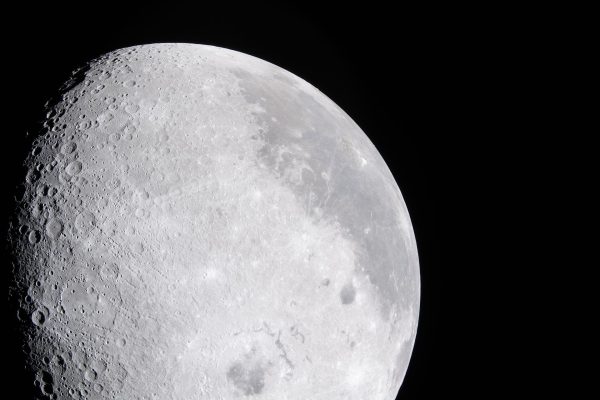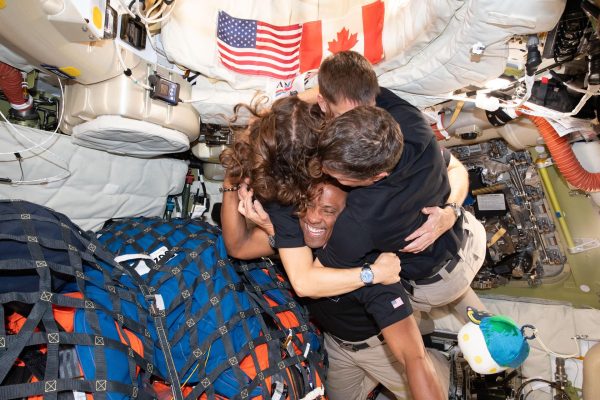
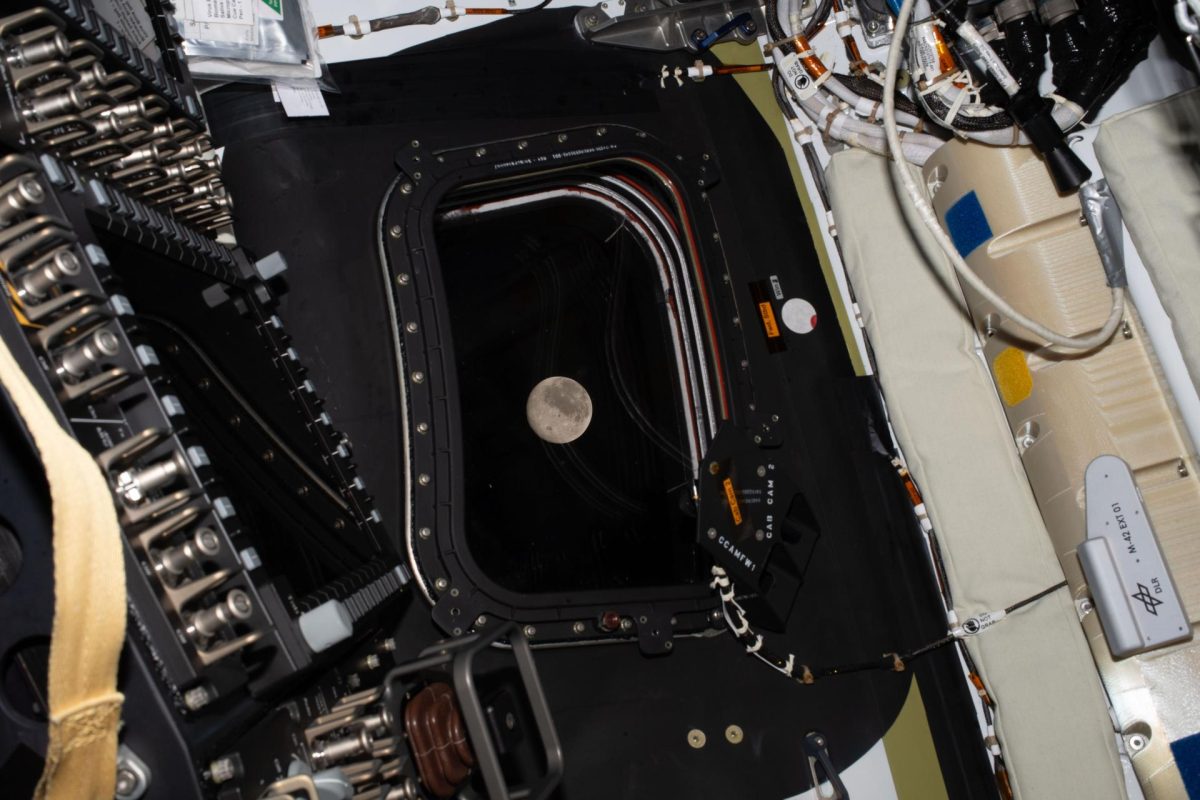
The Artemis II mission, a crewed lunar flyby, began on Wednesday, April 1, 2026, when four astronauts launched in the Orion spacecraft, named Integrity, from Kennedy Space Center in Florida. The astronauts, NASA’s Commander Reid Wiseman, Pilot Victor Glover, Mission Specialist Christina Koch, and the Canadian Space Agency’s Mission Specialist Jeremy Hansen, accomplished many historic firsts, including the farthest distance traveled by humans at 252,756 miles from Earth on April 6, beating the Apollo 13’s previously held record of 248,655 miles set on April 15, 1970. NASA reported that Artemis II lasted for 9 days, 1 hour, and 32 minutes, and traveled a total of 694,481 miles. NASA, alongside the US Navy, retrieved the giddy crew members from their capsule at the splashdown point off the San Diego coast in the Pacific Ocean on Saturday, April 10.
The trip experienced numerous delays, the most recent due to an issue with the flow of helium to the upper stage, but after the crew returned, they reported minimal issues and deemed the Artemis II mission an incredibly successful one. At its closest point, Integrity was approximately 4,067 miles from the Moon’s surface, during which the Astronauts lost contact with NASA back on Earth for about 40 minutes, and when many of the headlining photos were taken, including Earthset, the photo depicting Earth as it appears to be setting behind the Moon, which occurred just before the solar eclipse of the Moon fully blocking Integrity’s view of Earth. Artemis II was also the first deep-space crew to have a direct call with astronauts on the International Space Station. Additionally, the crew has proposed naming two craters on the Moon: the first, Integrity, in honor of their spacecraft, and the second, Carroll, in honor of Commander Wiseman’s late wife. The proposals have been submitted to the International Astronomical Union, but are still under pending review.
“Under Artemis, NASA will send astronauts on increasingly difficult missions to explore more of the Moon for scientific discovery, economic benefits, and to build on our foundation for the first crewed missions to Mars,” NASA’s Artemis website explains. The Artemis II mission was the first crewed mission of the Artemis program and acted as a test flight, primarily focused on the systems’ functional capabilities. The crew performed a myriad of planned manual tests on procedures and performance, Orion’s life-support and navigation systems, and practiced communications, piloting, and trajectory adjustments to pave the way for future missions.
Orion is NASA’s newest spacecraft, and “currently the only spacecraft capable of crewed deep space flight and high speed return to Earth from the vicinity of the Moon,” NASA explains in their overview of the craft. The spacecraft had 15 cameras attached directly to the craft, in addition to the 17 handheld cameras operated by the crew. Orion was created with the intention of being reused, in parts, for future missions. After the splashdown of the Artemis I mission, Lockheed Martin, the prime contractor of the Orion craft, determined that ten parts from the ship could be reused for the Artemis II mission, including a crew seat, a vision processing unit, and a GPS receiver. It is not yet determined whether parts from the Orion of the Artemis II mission will be used for the Artemis III mission, which will test commercial landers from one or both SpaceX and Blue Origin, and is scheduled to launch in 2027.
The most talked about complication on Integrity was with the Universal Waste Management System, more commonly known as the space toilet. The toilet fan, used to expel the crew’s urine into space, was reported to be jammed, which NASA’s director of flight operations, Norm Knight, told reporters was due to a controller issue on the toilet. NASA’s ground team on Earth instructed Integrity’s crew how to fix the issue, which the crew was able to accomplish.
The Artemis II crew was the first astronauts in almost 54 years to go on a mission to the Moon, the last crew being those on Apollo 17 in December 1972. After the Apollo program ended, NASA began receiving a smaller proportion of the national budget, and “it was decided that it was going to be important for the country to pursue space exploration in a more economically modest way,” curator of the Apollo collection at the Smithsonian National Air and Space Museum Teasel Muir-Harmony told ABC News. The smaller budget led to the large gap between space missions, which many members of the public have wondered about.
One of the benefits of the Artemis II mission for the public that the Apollo program did not have was the near-constant live stream of the astronauts, free to watch on NASA+ and YouTube, and also available on some paid streaming services. Many space-lovers frequently tuned into the live-stream, and many iconic moments circulated on social media, like the Nutella clip in which a jar of Nutella slowly floated across the screen behind the crew on Flight Day 6, the crew waking up to Chappell Roan’s “Pink Pony Club” on Flight Day 4, and a video posted online by the crew in which they spoofed the Full House intro on Flight Day 6. Additionally, the flight crew quoted Project Hail Mary, Andy Weir’s newest book that was recently adapted into a movie starring Ryan Gosling, radioing, “Amaze! Amaze! Amaze!” to Mission Control on Flight Day 5.
50-year-old Commander Reid Wiseman is a pilot, engineer, and Navy veteran. In 2009, he was selected by NASA to become an astronaut. Wiseman went on his first spaceflight in 2014, a 165-day mission for Expedition 41 aboard the International Space Station in which he served as Flight Engineer. He earned his Bachelor of Science degree in Computer and Systems Engineering in 1997, his Master of Science degree in Systems Engineering in 2006, and his Certificate of Space Systems in 2008, and has two children with his late wife, Carroll.
50-year-old Pilot Victor Glover was selected by NASA to become an astronaut in 2013. His first spaceflight was aboard SpaceX’s Crew Dragon as a Crew-1 Pilot, and he served as a Flight Engineer aboard the International Space Station for Expedition 64/65. Glover completed four spacewalks and was in space for 168 days. He received his Bachelor of Science degree in General Engineering in 1999, his Master of Science degree in Flight Test Engineering in 2007, his Master of Science degree in Systems Engineering in 2009, and his Master of Military Operational Art and Science degree in 2010. Glover has four children with his wife, Dionna Odom.
47-year-old Mission Specialist Christina Koch was selected by NASA to become an astronaut in 2013. Koch set a record for the longest single spaceflight by a woman with her role as Flight Engineer on the International Space Station for Expeditions 59, 60, and 61, spending a consecutive 328 days in space while also participating in the first all-female space walks. She earned her Bachelor of Science degree in Electrical Engineering, Bachelor of Science degree in Physics, Master of Science degree in Electrical Engineering, and later received an Honorary PhD from North Carolina State University. Koch also served as Branch Chief of the Assigned Crew Branch in the Astronaut Office.
50-year-old Mission Specialist Jeremy Hansen was selected by the Canadian Space Agency to become an astronaut in 2009. Artemis II was Hansen’s first spaceflight, but he participated in the European Space Agency’s CAVES program during which he lived underground for six days in 2013 and was a crewmember of NEEMO 19, living and working on the ocean floor off Key Largo, Florida, for seven days in 2014. He earned his Bachelor of Science degree in Space Science in 1999 and his Master of Science degree in Physics in 2000. In 2017, Hansen became the first Canadian entrusted with leading a NASA astronaut class, where he trained astronaut candidates from Canada and the United States.
NASA’s Artemis website has further information about the Artemis program, future and past Artemis missions, and crew biographies, along with all of the public photos from the Artemis II mission. More photos are expected to be released in batches soon.