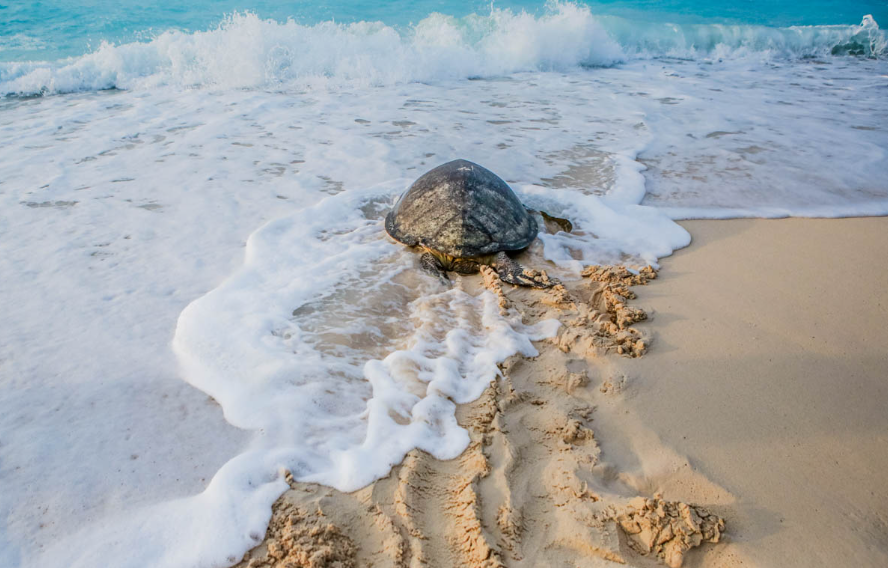
After 43 long years on the list of endangered species, Green Sea Turtles have finally made their way off! According to the Smithsonian Institution, “The International Union for Conservation of Nature (IUCN) no longer considers the marine creatures endangered, instead reclassifying them as a ‘species of least concern.” This means they are no longer facing extinction and have repopulated, but they are still important to our ecosystem. The sea turtles were first announced to be endangered in 1978 under the Endangered Species Act (ESA). Throughout the years, people have hunted turtles for their shells, killing off about 95% of the sea turtles in the Caribbean which was anywhere from 19-33 million according to the National Oceanic and Atmospheric Administration. Another prominent threat to the sea turtles is getting caught in fishermen’s nets. According to the Oceanic Society, scientists estimate that sea turtles have been getting caught in fishermen’s nets by accident since 1990. After they were placed onto the ESA, the threats didn’t stop. The turtles faced major pollution, rising sea levels, and warmer waters resulting in habitat loss for our green friends.
Green Sea Turtles nest along coastlines in over 80 countries, with their highest nesting count in Costa Rica and Australia, according to National Geographic. These turtles are found in the Atlantic, Pacific, Indian oceans, and Mediterranean Sea. They eat mostly sea grasses and algae, sometimes jellyfish and sea sponges. This raises concern because sea grasses are a main part of the turtles diet but are rapidly declining in growth. This is caused by water polluting, rising sea levels, climate change, coastal development, and disease. Another major problem for the sea turtles is direct take, which is when people illegally take sea turtles and their eggs for consumption and to make jewelry.
The Green Sea Turtle’s population has increased by 28% since the 1970s, according to the Oceanic Society.
Because of the Turtle Foundation, over 10 million eggs have hatched and made their way into the ocean successfully in Berau, Indonesia This is monumental because the mortality rate for Green Sea Turtle eggs is from about 43%-67% and studies show that only 1 in 1,000 sea turtles make it to adulthood, according to the Olive Ridley Project.
Green Sea Turtles need your help to keep them off the endangered species list. The World Wildlife Fund has found that 1,000 green sea turtles die each year from plastic ingestion alone! It’s estimated that about 100,000 mariene animals also die from plastic pollution each year as well, according to Earth.org. 8-10 million tons of plastic enter our oceans each year, every day about 13-15,000 pieces of plastic are also dumped in according to Earth.org.
So what can we do about this? There are many simple ways to reduce our use of single use plastics. One easy way is to use reusable coffee cups, shopping bags, and containers. The National Geographic also recommends packing an eco-friendly lunch. You can do this by using reusable snack bags and beeswax wraps to pack your food and consider not purchasing individually wrapped snacks. Instead you can buy snacks in bulk or make them at home. Please consider helping out our green friends and supporting marine life!