Iran is currently facing an economic crisis due to the dramatic devaluation of its currency against other major global currencies. One U.S. dollar is currently worth 1.45 million Iranian rials.
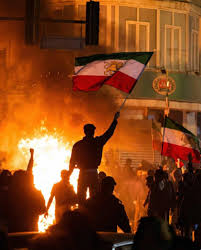
According to BBC, footage of the anti-government protest shows that these demonstrations are happening in more than 50 towns and cities, even in ones that were previously considered loyal. This has been the largest challenge to the state since the 2022 Women’s, Life, and Freedom protest. According to various human rights groups, more than 550 people were killed by security forces, displaying how authorities usually resort to violence to mitigate unrest.
Supreme Leader Ayatollah Ali Khamenei reacted to the protest with a statement in which he said, “rioters must be put in their place.” HRANA reports that at least 35 people have been killed as a result of the unrest.
These protests initially were a response to the country’s mismanagement of the economic downturn, which has increased due to foreign sanctions, and have expanded to criticism of public officials’ corruption. These concerns spiked when the price of basic goods such as chicken dramatically spiked. The Central Bank exacerbated the situation by ending a program allowing some importers to access cheaper US dollars compared to the rest of the market.
These demonstrations make it clear that Iranians are calling for the ouster of the Islamic Republic. However, these demonstrations are unlikely to be a threat to the state.
Iranian authorities have already cut off the internet through the Starlink satellite services in order to prevent videos from circulating online, in aims to prevent external activism from organizations. They threatened death sentences for protesters whom the government accused of being backed by Israel or the U.S. They also recently called for fast trials and execution of suspects detained.
However, this has led the U.S. government to release a statement saying “help is on the way,” encouraging protesters to keep creating disruption, and has threatened to take “very strong actions.” They also vowed that those responsible for killing anti-regime demonstrators will “pay a big price.” The U.S. also announced a 25% tariff on countries that trade with Iran. Trump canceled all meetings with Iran; as a result, crude oil prices increased by more than 2%. However, U.S. intervention in Iran has been heavily criticized because the U.S. often acts in its own Western interest, such as the 1953 coup, where the U.S. replaced a democratically elected Prime Minister who wanted to keep Iran’s oil profits for the people. Then the U.S. replaced him with an authoritarian who was friendly towards Western interests.
In Germany, the Chancellor Friedrich Merz believes the Iranian regime could be facing its final days. Israel, which opposes Iran, has been hoping for the Iranian regime’s destabilization. However, Palestine is hopeful that the protest dies down and that the regime stays in place since Iran has been one of the only nations that have been able to fight Israel. The Iran-backed Hezbollah, one of the most powerful non-state groups, is core for Palestine since it has managed to create some issues for Israel. In other words, the outcome of this conflict could trigger a chain of other geopolitical events.
Many nations and people will be following this demonstration closely, with some hoping for the anti-regime demonstration to succeed and others hope it doesn’t.