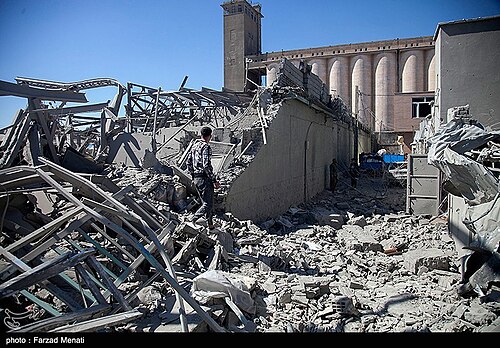
On February 28, Operation Epic Fury went into full effect, with American missiles, drones, and Israeli fighter jets bombing the capital of Iran, Tehran. Strikes have continued since then, with the United States and Israel targeting sites critical to military infrastructure, Iran’s nuclear programme, and Iran’s oil refineries. These strikes have led to the loss of internet connectivity in the region, the closure of airspace, and many deaths, with the Human-Rights Activists in Iran reporting that as of March 9, 1,761 people have been killed in Iran, 1,245 having been civilians. Israeli Defence Minister Israel Katz described the first strikes as a pre-emptive attack to remove threats against the state of Israel, forcing the United States to act as well. For the United States, though, this is not the only justification they are using to attack Iran, with Iran killing protestors against their government, as well as claims that Iran is attempting to develop nuclear weapons, being used as reasons as well.
Among those killed in the first wave of strikes was Iran’s Supreme Leader, Ayatollah Ali Khamenei, who had served since 1989, as well as senior officials of the Islamic Revolutionary Guard Corps, according to Israeli military intelligence. After confirmation of Khamenei’s death, his son Mojtaba Khamenei was appointed to replace his father as Supreme Leader of Iran, despite the disapproval of both Trump and Israel, with Trump telling NBC News, “I think they made a big mistake. I don’t know if it’s going to last. I think they made a mistake.” Iran has carried out widespread missile and drone attacks in retaliation, with the IRGC targeting Israeli government and military sites. Both sides of the war have been accused of expanding their attacks to include non-military targets, including neighboring countries, with Iranian President Masoud Pezeshkian on March 7 going on Iranian national television and apologizing to neighboring countries, claiming that Iran did not intend to invade neighboring countries and that the leadership issued a new command to not attack neighboring countries unless attacked first.
The war expanded to Lebanon on March 2 when Hezbollah, an ally of Iran’s government seeking revenge for Khamenei’s death, fired rockets at Israeli positions. Israel began to launch attacks in retaliation against Lebanon, hitting Beirut and parts of southern Lebanon, and on March 3, the defence minister of Israel said ground troops would advance and seize additional strategic areas in Lebanon. As of March 10, Lebanon’s health ministry said the attacks had killed at least 486 people.
Instability from the war has greatly impacted the global economy, particularly energy prices. Iran’s closure of the Strait of Hormuz, which accounts for 20% of global oil and gas supply, and attacks on major oil and gas hubs by the United States and Israel have caused many oil producers to suspend their operations, causing prices to surge. On March 9, oil prices almost reached levels of $120, only slightly dipping later because Trump claimed the war would end soon. The strait is unlikely to reopen soon as Trump’s call for allies to send ships to secure it has been ignored by other countries. While Trump claims the war will end soon, other responses have varied, with White House Press Secretary Karoline Leavitt previously suggesting the war could last up to six weeks, Israeli prime minister Benjamin Netanyahu saying the war would continue for as long as it is needed, and even Trump himself laying out an expansive plan to ensure Iran could not develop weaponry to target the US, Israel, or other American allies, which could prolong the war and potentially put US troops on the ground.