International Women’s Day is celebrated in many countries around the world. It’s been observed since the 1900s to recognize working-class women.
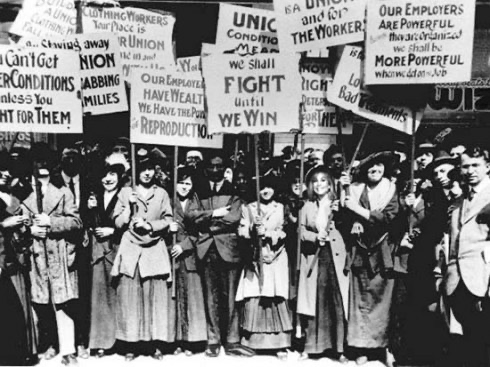
In the early 1900s, women were facing mass oppression, and general working conditions were harsh. In 1908, 15,000 women marched through New York City demanding shorter hours, better pay, and voting rights. First, according to International Women’s Day, “In accordance with a declaration by the Socialist Party of America, the first National Woman’s Day was observed across the United States on February 28.”
A revolutionary leader in making this an International Celebration is Clara Zetkin, who was a leader in the Democratic Socialist Party in Germany. She tabled the idea of an International Women’s Day where every year on the same day, working women could be recognized and press demands to the struggles that they are facing. According to AFL CIO, on Saturday, March 25, 1911, a fire broke out on the top floors of the Triangle Shirtwaist factory. At the Triangle factory, women had to leave the building to use the bathroom, so management began locking the steel exit doors to prevent the “interruption of work,” and only the foreman had the key. This fire at the factory with locked steel doors prevented workers from escaping, and more than 140 working women tragically died in the fire. This led to mass outrage and drew a vast amount of attention to working conditions and labor legislation, which sparked outrage against industrialization and patriarchal systems.
Other events, such as when Russian women workers in Petrograd held a mass strike and demonstration demanding Peace and Bread, and helped abdicate the czar. According to the Marx Memorial Library, the strike movement spread from factory to factory and effectively became an insurrection. In 1922, in honour of the women’s role on IWD in 1917, Lenin declared that March 8th should be designated officially as Women’s Day in order to honor the pivotal role of working-class Russian Women in the revolution. Later on, this holiday spread beyond the Soviet Union into other Socialist countries. Since it was mostly celebrated by communist countries, the holiday was mainly ignored in the West.
In the early 2000s, there was very little mainstream activity for International Women’s Day in the West because feminism wasn’t as popular. In 2011, Obama proclaimed March as “Women’s History Month” to reflect on “the extraordinary accomplishments of women” in shaping the country’s history. In the U.K., Annie Lennox led marches across London in support of the global charity for Women’s International, and many celebrities supported the cause.
Now, many younger generations recognize the current issues that women are facing in the status quo while also understanding the complexities of the patriarchy. However, the meaning of International Women’s Day has been lost. Instead of recognizing the working-class women and fighting labor issues, it had been diluted with people praising rich women and women celebrities. It’s important not to forget the importance of working-class women.