Imagine that instead of cancer being detected in its late stages, it is detected before it even fully forms. Thanks to recent medical breakthroughs, this reality is not as far as you may think. Cancer is a group of uncontrollable, abnormal cells present in one’s body that can form tumors and invade body systems. Within the last year, major research and advancements have been made in the detection and treatment of cancer. With these breakthroughs, cancer can be prevented altogether.
Throughout history, scientists and medical professionals have been finding ways to stop the spread and development of cancer. The incredible advancements made over recent decades have been nothing less than revolutionary. Currently, most of the time, cancer is caught after it has already developed and is starting to show symptoms. There are many, many ways that doctors can detect cancer with different blood tests, scans, and physical exams, most of which can only be seen when it has already started to develop and spread. Specific cancers can also only be found using specific tests, and one test can’t detect all cancers. From the National Cancer Institute Website, “For many tests, it is possible to have normal results even if you have cancer. And it is possible to have test results outside the normal range even if you are healthy. These are some of the reasons why lab tests alone can’t say for sure if you have cancer or any other disease.” In most cases, when it is caught in its early stages, cancer is treatable by means of surgery, chemotherapy, and cell treatments. When cancer is caught in late stages, after it has already spread to other parts of the body, it can be much harder to treat. Within the past year, and even in the past couple of months, major progress has been made in stopping cancer before it even starts.
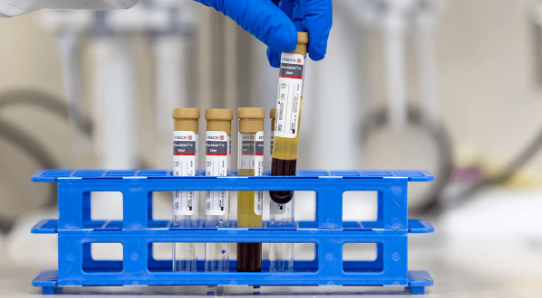
Similar to the current diagnosis, this diagnosis can also be made by blood tests. The test is much more accurate and much more sensitive. So sensitive that it can detect genetic material given off by early-stage cancerous tumors three years earlier than a normal test. Johns Hopkins University performed a study in May of 2025 on how, and how early, they could detect this genetic material. In an article by Amy Mone and Valerie Mehl on the Johns Hopkins University website titled Cancers can be detected in bloodstream three years prior to diagnosis, they write, “This study shows the promise of MCED tests in detecting cancers very early, and sets the benchmark sensitivities required for their success.” This shows that there is major progress being made on early intervention, with a promising future. Cancer is not a disease that develops quickly, instantly, or in full effect. It is a slow process that sometimes shows obvious signs and sometimes does not. Researchers are trying to find those subtle signs that can easily go unnoticed, and they are doing this by paying close attention to the biological processes and genetics in a person in which cancers are commonly caused. In an article written in February of 2026 titled, The next cancer breakthrough may be stopping it before it starts, by Senior lecturer of cancer biology, Ahmed Elbediwy, and Senior lecturer of genetics and molecular biology, Nadine Wehida, they write, “Large genetic studies reveal that as people age, their bodies accumulate small groups of mutated cells called clones that grow silently. Scientists have studied this particularly well in blood. These clones can help predict who might develop blood cancers like leukaemia, and the genetics, inflammation, and environmental factors strongly influence them.” This shows how scientists are working on a way to stop cancer before it starts. Both of these advancements have the potential to significantly change many people’s lives for the better.
These aren’t the only cancer breakthroughs that have recently been made. In an article from the Dana-Farber Cancer Institute written in January of 2026, by Beth Dougherty, titled Ten Cancer-Related Breakthroughs Giving Us Hope in 2026, Dougherty outlines these ten breakthroughs. There is mention of early-intervention, as well as advancements in treatments, such as new radioligands and cell therapies, protein degraders, and other targeted therapies. There are also other preventative measures, such as new tools to track the immune system, focusing on health and wellness, and even personalized cancer vaccines. Dougherty writes, “Cancer treatment has evolved dramatically in the first quarter of this century, but there is still much more to do to improve the lives of people with cancer.” All of this provides so much hope for the future of cancer development.
Even with these incredible discoveries, researchers are looking for many more to come. Dougherty writes, “That research has resulted in exciting breakthroughs — from cancer vaccines to targeted therapies — that are giving us hope that in the coming years, we’ll see more dramatic advancements for patients here and around the world.” The prevention and treatment of cancer has come a long way, and will continue to positively impact many people’s lives as it continues to advance.