On February 28, 2026, President Donald Trump initiated military action against Iran to eliminate its nuclear programs, destroy their military capabilities, and push for regime change. But Trump was not alone in this attack. He announced that both the United States and Israel would be launching “major combat operations” as stated on his Truth Social account.
Then:
This dispute is one of many that Iran and the U.S. have had, though it is one of the most concerning. These conflicts have stemmed from the shared past of both countries. It began in the 1900s-1950s when the U.S. and Iran had an early friendship, and the U.S. was seen as a positive “third force” against the British and Russian influence. Then, in 1953, the British and CIA intelligence staged a coup. This coup was orchestrated to overthrow Iran’s Prime Minister to protect oil interests and was viewed as a sign of distrust. From 1953 to 1979, the U.S. supported the Shah’s authoritarian rule in exchange for selling weapons and supporting Iran’s nuclear program. Then, there was a turning point in 1979, when the Islamic Revolution took place, and the Shah’s empire was overthrown. The Shah was then replaced by a Shia theocracy that viewed the U.S. as an imperialistic, anti-Islamic entity. This started the hostage crisis. Iranian students seized the U.S. embassy in Tehran, holding 52 Americans hostage for 444 days from 1979 to 1981, ultimately severing diplomatic ties. All of these events have led to the narrative Iran and America now have of each other: the “Great Satan” narrative. Iran now thinks of the U.S. as a dangerous intruder to the Middle East and has formalized anti-American rhetoric.
Now:
This leads to current events. The strikes commenced on February 28, targeting Iran’s capital city, Tehran, and Iranian leadership, as well as military infrastructure across the country. In a joint U.S.-Israeli airstrike, Iran’s Supreme Leader, Ayatollah Ali Khamenei, was killed in his compound in Tehran. In response, Iran launched a series of counterstrikes against Israel and America. They struck U.S. military bases in the region, military and civilian locations in Arab states that house U.S. forces. The bases were located in Bahrain, Qatar, and Cyprus. This conflict has continued for the last five weeks with no clear label for the dispute, though a ceasefire was issued on April 7, 2026, and as of April 14, it has been held.
As of the week of April 13, 2026, U.S. ships were sent to blockade the Strait of Hormuz, a vital chokepoint for shipments of oil, fertilizer, and other vital commodities. News out of Washington says it will allow ships coming or going elsewhere. This blockade was created to control access to Iranian naval ports and restrict Tehran’s ability to profit from oil exports in an attempt to put pressure on the country. The U.S. maritime agency, the International Maritime Organization, has said no country has a legal right to block shipping in straits used for international transit. Secretary-General Arsenio Dominguez told the BBC, “I do understand there is a conflict going on there, but there is still no legal basis in international law to take any actions to block any strait used for international navigation.” Iran has responded to the blockade, calling it “piracy,” and they are threatening to retaliate by targeting ports in the Gulf states.
The Impact:
The closure of the Strait of Hormuz, through which a fifth of the world’s energy shipments pass, has sent oil prices surging, but Iran has continued to export its own oil, in turn, profiting from the skyrocketing costs. According to the U.S. Energy Information Administration, “In 2022, around 82% of crude oil and other fossil fuels leaving the Strait of Hormuz were bound for Asian countries.” China is estimated to buy 90% of the oil exported from Iran. On Tuesday, they called the US blockade “dangerous” and “irresponsible.”
Many experts have been worried, stating that a prolonged blockade could damage the global economy, pushing up the cost of gas and food. It also has the potential to limit access to critical materials like aluminum, helium, and feedstocks for fertilizers.
Speaking Out:
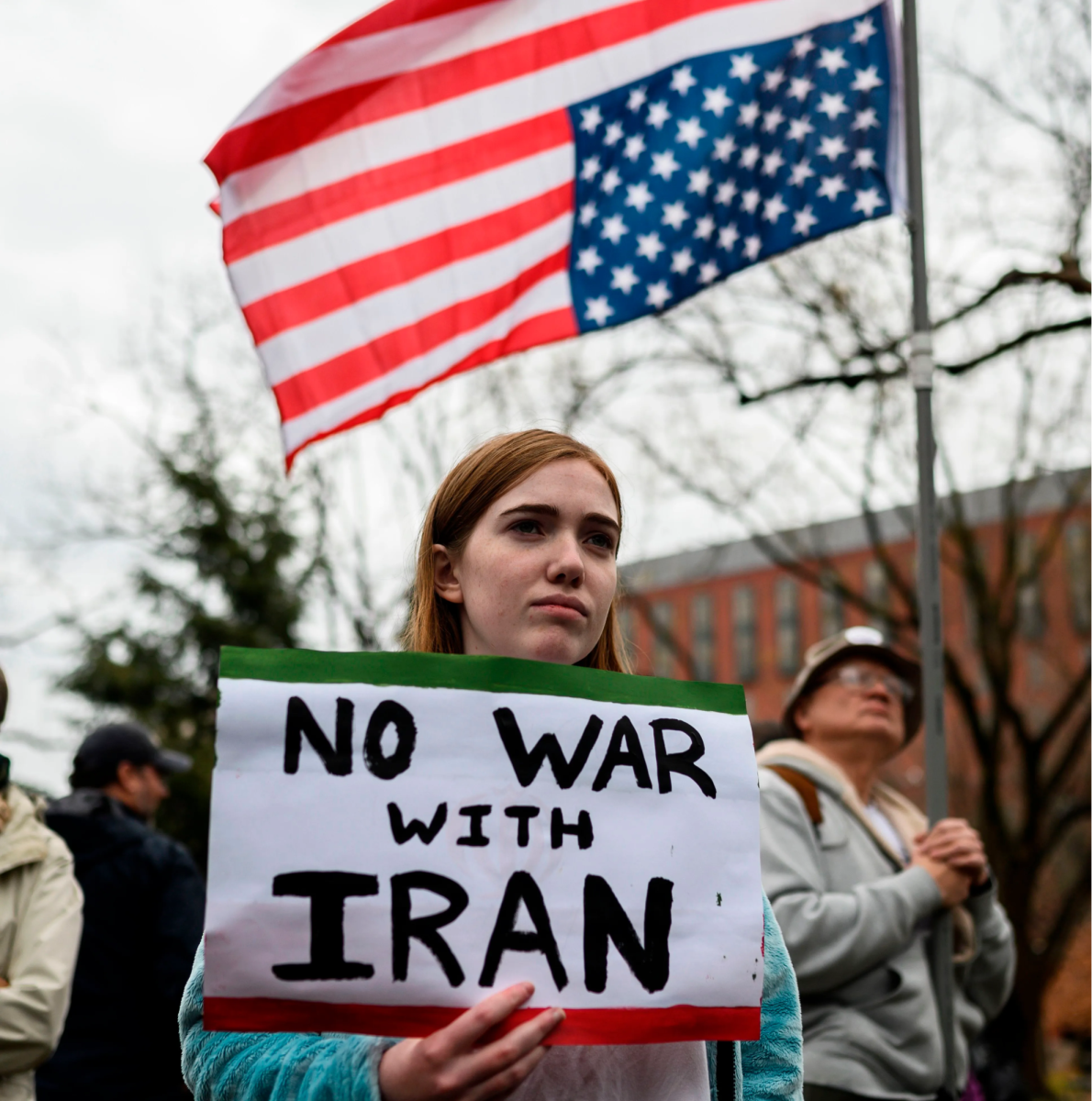
Many countries have spoken out against this conflict, voicing their opinions on the unpopular war. European countries are stiffening their resistance to the U.S. requests for help against Iran. For example, Trump has said that France closed its airspace to aircraft transporting military supplies to Israel. This has caused a growing fury from Donald Trump against Washington’s historic allies. “All of those countries that can’t get jet fuel because of the Strait of Hormuz… You’ll have to start learning how to fight for yourself,” Trump wrote earlier this month. But France is not alone in this stance. Switzerland and Spain applied similar bans earlier this month. Now, even America’s most loyal allies are showing caution.
These events are ongoing, and new developments are oncoming.