“We are Charlie Kirk, we carry the flame” is a powerful phrase that has been spreading across social media. The song is a right-wing AI-generated song, meant to honor the life of Charlie Kirk. After his recent death, the right often protects Kirk on social media and condemns any user who still remembers his unjust preachings.
In recent days, social media has been filled with memes of Charlie Kirk, such as ‘Kirkifiying’ images, poking fun at his wife, Erika Kirk, and making edits. However, the popular song “We are Charlie Kirk” by SPALEXMA has been the background song to a lot of these memes.
This song was posted just after Kirk’s death, but has gained significant traction and usage in recent days. Now, For You Pages have been filled with this song. According to Times Now World, the song has appeared in more than 58,000 TikTok videos. It first raised a question about whether it was AI or not, but according to Forbes, the song was generated by Artificial Intelligence.
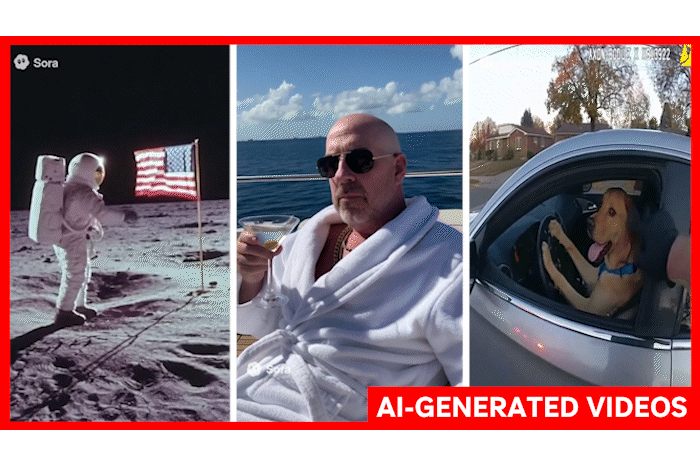
These types of media are soaring in popularity. OpenAI recently released the Sora AI app, which generates short-form content. In less than five days, the app hit over a million downloads and soared to the top of the iPhone App Store rankings. Sora creates realistic videos of fake events or scenarios, and they also use a similar algorithm to addictive apps such as TikTok and Instagram, making fake content more accessible and prominent in the media, such as videos of celebrities and politicians doing and saying absurd things.
Legal issues have also arisen from AI-generated content. For example, according to CNN, the Motion Picture Association stated that, “videos that infringe our members’ films, shows, and characters have proliferated on OpenAI’s service and across social media.”
Currently, prompts with copyrighted characters result in error messages in order to avoid any legal complications. OpenAI CEO said that he’s aiming for “more granular control over the generation of characters.”
O’Brien, a sociology professor, summed up the current legal standing of IP law, “What’s forming now is a four-part doctrine in US law. First, only human-created works are copyrightable. Second, generative AI outputs are broadly considered uncopyrightable and ‘Public Domain by default.’ Third, the human or organization utilizing AI systems is responsible for any infringement in the generated content. And, finally, training on copyrighted data without permission is legally actionable and not protected by ambiguity.”
There are critics who also propose ethical issues. Mary Ly, the product marketing manager at Lucasfilm, said, “AI video is forcing us to confront an old question with new stakes: Who owns the output when the inputs are everything we’ve ever made? Copyright was built for a world of scarcity and single authorship, but AI creates through abundance and remix. We’re not seeing creativity stolen; we’re seeing it multiply.” Displaying the effect this lack of creativity could have on our future society, and the reliance on AI to create outputs.
Now, it’s harder than ever to spot “fake content” on social media. Sora AI and other AI video platforms are muddying this line even more, making it harder to discern reality.
Even though most AIs have watermarks, users posting such videos have removed the watermarks relatively easily, so it is important to question the media you consume and not to believe everything you see online this holiday season.